Showing posts with label design patents. Show all posts

Friday, September 12, 2025

The Labubu, the Lafufu, and Intellectual Property Wars

If you haven't heard about the Labubu yet, you must be very disconnected. Aside from being a recent craze among youth and the trendy, they've appeared in TV shows, in various unsanctioned forms, and in the news. Most of us have heard about the Labubu and their counterfeit counterparts, frequently known as "Lafufu".

For those of you who somehow have managed to remain oblivious, first, let me congratulate you on your commitment to that. Second, let me introduce you to what I've started thinking of as the latest Beanie Baby (because that was my childhood's out-of-control craze). These plush toys come in all sizes and are collectively known as "The Monsters". They embody the concept of grotesque-cute, having cute cuddly animal bodies, chubby cheeks, and aggressively lowered eyebrows and (exactly 9) bared, pointed teeth. 

A soon-to-be-released Labubu, selling for $299.99. Image taken from Pop Mart website.
Now, I am not writing this post because it struck me as a good idea or piqued my IP interests like usual, but because I was asked a specific question regarding the Labubu/Lafufu relationship by a friend of mine. And, as always, something simple quickly became complex, because IP is like that. 

Let's start with paraphrasing her question. She wanted to know why there were so many fake Labubus on the market, and why their manufacturer didn't secure exclusive rights via design patent. [I'd like to briefly redirect things to point out that I have managed to teach people around me so much about IP! There's no way she would have been aware of design patents and their purpose if I hadn't talked about them enough.] She also wondered how it was possible for some counterfeits to be so faithful to the original product as to be almost impossible to differentiate. After all, who hasn't, over the years, seen a dupe of  designer brand with some kind of misspelling or inverted logo to try to dodge infringement? Yet some Lafufu might as well be made in the same factory by the same people, they are so accurate. 

[Side note: I recognize it is possible some are stolen from authorized factories and sold off-brand, I am not going to focus on that.]

My friend's question has multiple answers, the first of which is fairly easy. One of the aspects of Labubus that makes them so collectible are the many different varieties, some of which are rare, and must be bought "blind" in concealed packaging. This drives the desire to buy more, enhancing the feeling rarity and specialty when found. It's strategic marketing but makes a design patents almost impossible. Because these differences are in appearance, and design patents protect specific appearances, each Labubu would need its own separate patent (at least in the US). Since there are varieties are multitudinous, and with new versions introduced and potentially released for a limited time, pursuing design patents for the full range would be wasteful. The cost, in both time and money, would outweigh the benefits. ROI: probably negative.

The second answer, and at a sort of intermediate level, is their international marketing. A design patent can only be enforced in the jurisdiction where it was issued. So not only would they need many different iterations to protect all the different designs, they would also need to pursue them across many patent offices. No real global patenting office exists; just treaties to help ease the process of transferring applications from one granting body to another.

At this point, if you're thinking about the possibility of some kind of trademark on an international scale, or perhaps trade dress for the Labubu, you'd be closer to a potential answer--if the company Pop Mart (owners of Labubu) wanted to represent their whole brand with the Labubu or The Monsters. As best as I could find, they have many registered marks in many jurisdictions, including "The Monsters" and "Labubu", but that mostly just protects them against other entities identifying the source of the sales as Pop Mart or their Labubu. Their attempts at using the trademarks haven't been effective. 

A logo owned by Pop Mart, found on WIPO
This actually brings us close to the third answer of why there are so many Lafufus of varying quality and correctness. Enforcing a brand on a global scale is challenging at the best of times, but when you have a fast-selling sensation it is even harder, because counterfeits pop up and disappear as quickly as the real merch. And if they don't have the right kind of claim attached to their Lafufu, it might not quite be infringement. 

More than that, the company Pop Mart and the Labubu originate in China. And China is not known for being terribly strict enforcers of IP rights holders. In fact, you wouldn't be blamed for thinking that China is one of the top sources of fraudulent, infringing goods sold worldwide. The government does not have a good reputation for protecting foreign IP holder rights in China, or for staunching the flow of fake goods from their country into others. 

Since they might even have a chunk of their national income derived from these fakes, trying to suddenly enforce the IP rights of a massive sensation might be difficult. Not that the government isn't trying; they are, in fact, attempting to do their best to control it. 

Beyond that, many consumers, quite frankly, don't care if they are buying Lafufus. They know they're fakes and still purchase them. Some revel in the weirdness of the fakes and the variations they present on the original. That makes it even harder to stop their production, when the demand for a fake might justify the risks of setting up a more permanent operation.

Yet another complication? I've read that two of the best sources for a Lafufu are Shein and Alibaba, which are Chinese-owned online sales companies. They can't enforce Labubu IP within their own borders.

It extends beyond that, though. These are just the three most obvious and accessible answers for why the Lafufus seem to run unchecked.  


Meanwhile... I can only imagine the schadenfreude certain IP enforcers are feeling as China's IP enforcement struggles to crack down on counterfeits and their circulation.  

Wednesday, May 28, 2025

Bluebells and Blue Bell

In a very exciting event for me, my Texas bluebells (Eustoma exaltatum) have bloomed! These striking flowers were raised from seed over the past year. It was challenging, and the number of adult flowering plants I have today is painfully fewer than the number of seedlings initially germinated. 

Please do not visit my yard to see this flower without an invitation, I won't be happy
Fortunately, I planted several Texas bluebells in the Fondren Rain Garden, so anyone can enjoy their beauty. 
These two spent blooms are in the rain garden; there will be more soon!
Why the excitement? Aside from the difficulty of raising them, the Texas bluebell was once an iconic flower of this region. However, it was so beautiful, that people picked enough of the flowers to nearly wipe them out. Today, it is not often seen in the wild, and you are more likely to find a cultivar or close relation for sale. Fortunately a few people recognized the need to collect and preserve some specimens, and the original wild-type plant is making its way into native gardens; maybe one day it will again grow wild in abundance. 

The Texas bluebell is also notable because it is the namesake of our regional ice cream brand, Blue Bell!  It was once so well-known it could be considered a symbol of the region. Now there are probably more people familiar with the ice cream brand than the plant.

Which brings us to the real topic of the post: Blue Bell IP. After all, it's a good excuse to look at some delicious trademarks and patents.

Despite being an ice cream (and also butter) manufacturer for nearly a century, Blue Bell Creameries owns only two patents. Both are designs for "ice cream stations", which appears to be not a whole ice cream scoop store, but rather just a stand.

The front page of D293,747
It isn't clear if this is meant to be indoors or out, or if it should be for selling just Blue Bell ice cream. Distinguishing characteristics of the two are also not immediately apparent. (Design patents are not very detailed.) Have you ever seen one of these ice cream stations? Check out US D293,748 and US D293,747 at the links. 
It's definitely for serving Blue Bell ice cream, but they make nothing else clear
On the other hand, Blue Bell owns several registered marks, many no longer active. Let's look at a few of the more iconic and recognizable entries.

The milkmaid and cow silhouette is carved into every Texan's brain, I think. There's more than one iteration registered, but here's a link to the TSDR entry for no. 1144445, issued in 1980.  

An encircled version, registered 1985, no. 1321048
The plain wordmark for Blue Bell, no. 972517, was registered in 1973. I think that's around when they were big enough to actually need a federal mark, rather than just Texas state or common law. See all of its information at the TSDR here.
The specific font was registered in 2023, no. 7106559
Blue Bell also takes some of its flavors very seriously. For example, Moo-llennium Crunch. I recall this flavor's introduction. Its registration was a little late in 2002, possibly because they didn't plan ahead and submitted the application in November 2000. Visit the specimen images and more from the TSDR

This is rough, I'm really craving ice cream now. Good thing I planned to visit the grocery store after work! For any Fondren staff readers, keep an eye out for a relevant announcement this week. You might be in luck, if you're a Blue Bell fan...

Monday, October 28, 2024

Desiging Shoe Patents

Some of you may recall how much I love shoes. And some of you may have met me in person, and may know I love shoes from my attire. For those of you who are unaware, I really enjoy shoes.

Unfortunately, I tend to enjoy fun high heeled shoes the most, and occasionally life demands that I must dress "practically", which tends to mean athletic shoes or sensible flats. I wear flats into and out of the office, simply because I know that the nearly mile walk to and from my parking would be disastrous on my heels. I've seen the damage asphalt can cause and rough, broken asphalt is a quick way to to break a heel completely. But what about other times? If a dress code says "sensible" or some other similar, disappointing term?

Last week, in response to my disappointment with an event's sensible dress code suggestion, a coworker joked that she was surprised I didn't have"off-roading" heels. I had that concept stuck in my mind all weekend, and finally did the librarian thing and started searching for some kind of matching concept.

Allow me to explain how shocked I was that among the first set of results was the page for Sneex. Which kind of fit the bill. (Visit the site to understand.)

Now, I had not heard of these on their initial release; despite my love of shoes, I don't really care to follow fashion news closely. That's probably because I know what I like and it isn't always fashionable... like Sneex. I really like these shoes, even though most of the internet seems to think they're a crime against footwear, stilettos and sneakers both. 

But what do these have to do with this blog?

Well, I'm sure you can only imagine my delight when I noticed the product description:

I love shoe patents
That's right, a patented design! Oh, what joy! Shoe patents! 

They have 22 design patents, and most look remarkably similar. I won't list all of them or insert all of them here, but here's a taste: 

Sneex: high heeled sneakers, patented
View the rest of US Patent D1,041,835 here.

Anyway, I'm glad I could share these with you. 

And apologies about my long silence; there are a lot of projects going on that have demanded my attention.

Friday, February 16, 2024

If the Shoe Fits, IP It

Shoes are amazing. I mean, I really like shoes. I am a shoe person. If you work in Fondren, chances are you've noticed some of my (very impractical) shoes.

Just in case you were wondering about today's pair

In light of that, I cannot believe I've hardly spent any time on shoe IP! 

But, I attended a talk at the Rice Business school with Stuart Weitzman recently (I didn't win the raffle for custom boots and am still feeling pain), and it really inspired me to think about shoe IP. I even asked Mr. Weitzman about his IP, wondering if it was challenging to register his personal name for a trademark. He said it was no problem--which I didn't expect, but then, there probably weren't a lot of Stuart Weitzmans trying to register their names for fancy shoes. 

The thing is, I recall just staring into the window the the Stuart Weitzman store in the Galleria, ogling those shoes, when I was younger. It was the kind of store I didn't even have an excuse to go into, so I just stood outside and lusted after the display shoes, which were beyond impractical for a 13 year old. At the time, I was just coming into my unique shoe tendencies, which were inspired in no small part by the fact that I attended a uniformed school, where we had to wear tennis shoes most days and "dress" shoes on dress days. The "dress" shoes were (for some unfathomable reason) Doc Martens, and every single girl in my grade always managed to have the exact same style of New Balances. But then I discovered that some athletic shoes also came with metallic striped colors. And Vans released a style that turned (in my case) pink in the sun. Once I found out I didn't have to wear plain athletic shoes to meet the standards of a uniform, my life's work of finding unique shoes began. Athletic shoes in pink suede with faux fur? Check. Throwback Roos complete with zippered pocket and neon colors? Check. Buckled mules with wooden soles? Check. My grandmother's vintage Uggs (about four sizes too large), before they got popular years later? Check. Bright orange patent leather flat platforms? Check. High heels on sparkly flip flops? CHECK!

As an adult, the world of shoes only grew wider. And in celebration of how much fun shoes are, and how they can come in any imaginable variety today thanks to designers like Stuart Weitzman, let's explore some IP.

We really must start with Mr. Weitzman's trademark, since it inspired this whole entry. Now, there are many registered marks under that name, for a variety of goods and services. But what we want most are shoe-related marks. A number are the word mark Stuart Weitzman, for "retail store services featuring shoes" and etc. Like, 3 live ones: 2749908, 5110490, and 4971730. The trademark registration number for just shoes as a good is 1386002, dating back to 1985. 

Two others stand out to me a little more. The first (registration no. 2571208) is for the word mark phrase "A LITTLE OBSESSED WITH SHOES", which is from an early advertising campaign that was brought up during his talk. It worked brilliantly, because it was a clever strategy to spread brand familiarity and even loyalty, rather than just a shoe. Unfortunately, I can't find an image from the earliest of these, but I have shared below the images used as specimens in the TSDR.

I understand this one not at all

But note the bottom left: a little obsessed with shoes
Secondly, there's the registration for the architectural design of his stores. Apparently, this unique look by the famous Zaha Hadid helped him achieve new markets. It's also a good reminder that IP goes beyond logos and brand names, and into the overall branding strategy. 3797782 is for trade dress, a niche sort of service mark. 
A registered retail store appearance
I hope Mr. Weitzman forgives me for my poorly worded question, and for drooling on his store's windows decades ago. 

Luxury shoes aren't just for women or high fashion. Probably the most iconic, recognizable shoe today is an Air Jordan. It is equally acceptable for a man to collect and covet shoes when it comes to this brand, whereas one might otherwise (at least in certain age and social groups) face some scrutiny or censure. 

The currently active word mark "Air Jordan" was first registered in 1985, no. 1370283. It does not claim any color, style, etc., just the characters, and is for footwear and athletic clothing. Michael Jordan might have been long remembered for his basketball career, but this brand (actually owned by Nike) has made him truly immortal. 

Who doesn't know this?
My first thoughts when I think of the brand are of the jumping silhouette imposed on the words Air Jordan, but surprisingly that is not a registered mark and never was. Issued serial no. 74041037 in 1990, this combo word and design trademark was marked abandoned and finally invalidated in Nov. 1994.
I don't know this
I clearly don't keep up with this brand, since they've been using registration no. 3725535 trademark design since 2009. It's incomprehensible to me, unless they're trying to move away from Michael Jordan as a person. Those jumps were famous. Perhaps with time, they assume that reputation has faded, or that the Nike swoosh (too many registrations to list) is branding enough. Or perhaps they just want to use it without having to manage it as a trademark, since it still shows up in a substantial number of their specimen photos.
Why yes, they did select something out of date for a specimen
In my defense, their specimen for the word mark has the silhouette, and so does the small icon on the Wikipedia brief. So there.
Why would they abandon this? To move away from the Jordan person?
Want another shocking piece of shoe trademark info? Louboutin (a brand of shoe as swoon-worthy as Stuart Weitzman's) does not own that specific color of red as applied to the sole of a shoe. At least, not in the U.S. You can see on the TSDR record that it is registered in France. 

I'd like to move away from trademarks, though, and look at a few design patents. Mr. Weitzman mentioned design patents when I asked my (poorly phrased) question. He seemed dismissive, but I notice a few brands rely quite heavily on them.

First, Nike was probably the frequent assignee I found in my search. Here's an example of one that might relate to Air Jordans, US D1,004,270.

Could be Air Jordans, or it could just be citing them
Another designer name I notices, if not as often as Nike, was J. Choo. Jimmy Choo makes some very nice shoes; that's a brand up there with Weitzman and the likes of Louboutin. Even Terry Pratchett knows they're good shoes (if ever an author wrote some great librarians, it was Sir Pratchett--and I don't just mean The Librarian). This is a fancy shoe. To see the color version of the photo, visit this link.
Almost has a early 1900s feel
And finally, because not everything in life is about fancy shoes, here's a patented Crocs design. I've never owned a pair of Crocs, but I'm aware of their popularity, and that everyone wants to copy them. This version won't be duped! Thanks, US patent D1,001,431.
Don't copy these
With that, I need to stop looking at shoes. I already went shoe shopping and bought another pair thanks to these recent events. Just remember: if you like the shoe, it doesn't matter if it's fancy or expensive. What matters is if you can wear it and you like it! Fit isn't event that important if they're as good as the pair below, which are so cheap they don't even have a brand.
Too cheap for functional buckles, but still great


Wednesday, February 7, 2024

Potato Chip Patents!

Have I been on a food patent kick lately?

Possibly. But they really offer an interesting glimpse into how we eat and the nature of mass market foods.

Really, it was Lays that came up in a conversation that sparked this entry, and if they specifically had potato chip patents. Our bet was that yes, they did; I just needed to find some. (I didn't need to look to know they would have copyrights and trademarks.)

As it turns out, Frito-Lay (the owner of Lay's, a division of PepsiCo) has patents not only for creating potato chips, containing them, shaping them, de-oiling them, and frying them, to name just a few, but they also own patents for specific potato cultivars. 

Some of these patents are quite a bit more interesting than others. I'm sure many of you are thinking, "Hannah, you've taught us all that tubers, like potatoes, cannot be patented!" But they can--just not as plant patents. Utility patents for potatoes are possible; they also are possible for genetically altered plants and plants created via sexual reproduction.

Here's one of the more recently granted patents for a potato variety they own: US 10,561,114 Potato Cultivar FL 2512.

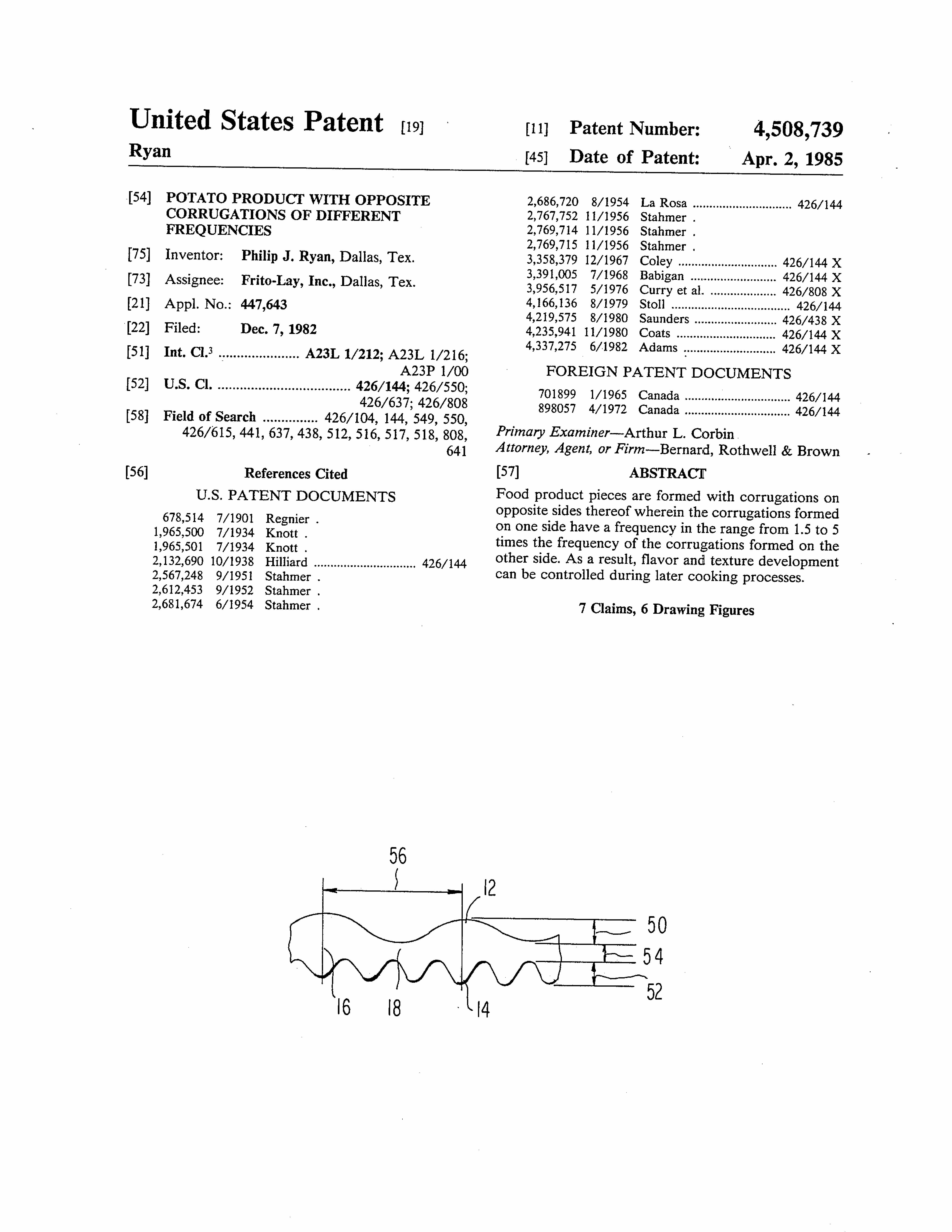
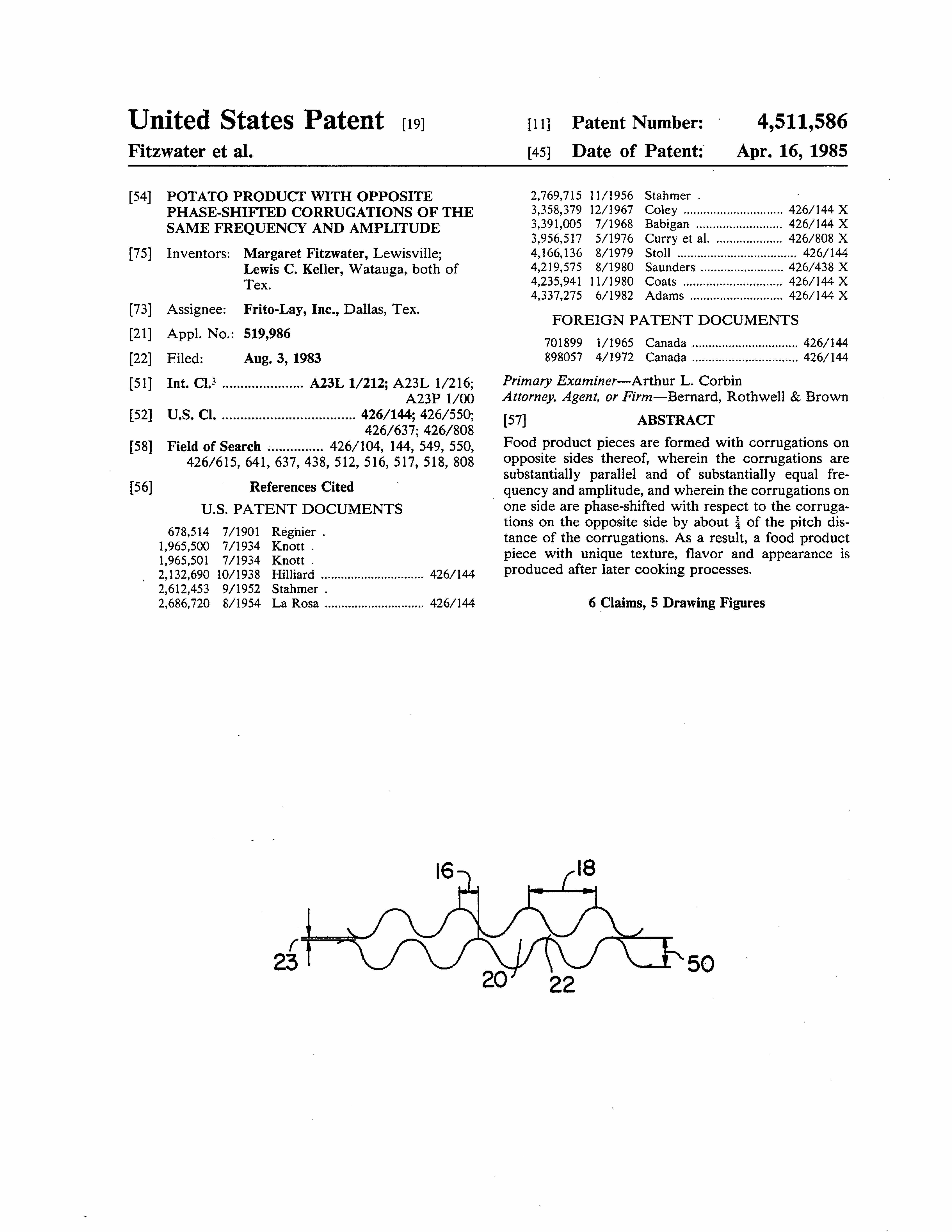
Frito-Lay patented the process for creating the unique ridged chips. Here are two of the patents for making the ridges in slightly different formations, US 4,511,586 and 4,508,739:

Opposite corrugations, with different frequencies (or number of wavy dips 'n' ridges)
Opposite phase-shifted corrugations with the same frequency and amplitude, very distinct from above

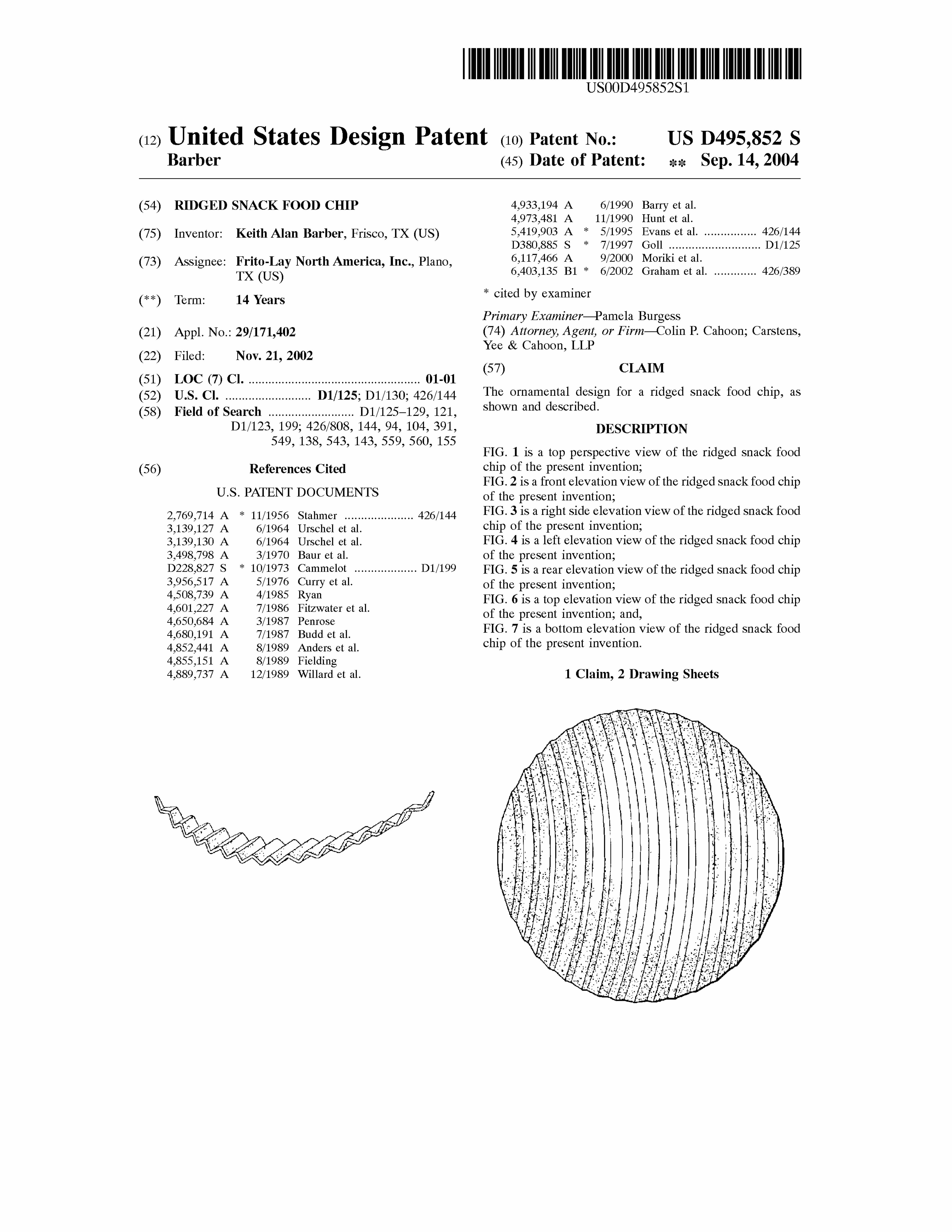
Later, they moved on to patenting the design; there are several for that, but here's an example, D495,852:

Explicitly and exclusively for the ornamental, non-functional appearance!
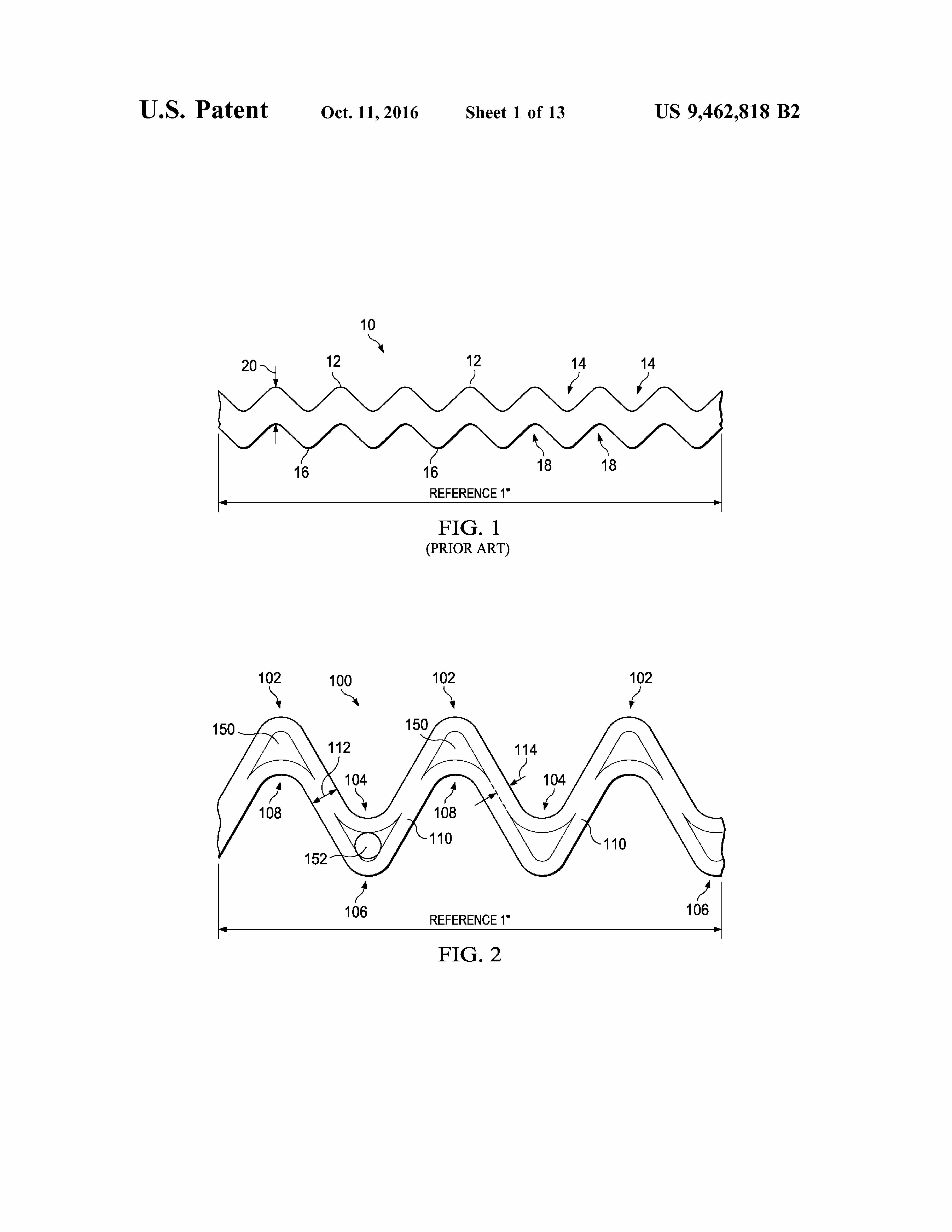
There's even a high-amplitude version in a later utility patent, US 9,462,818, because these ridges are EXTREME: 
Note the very different amplitude between the prior art and this patent's version

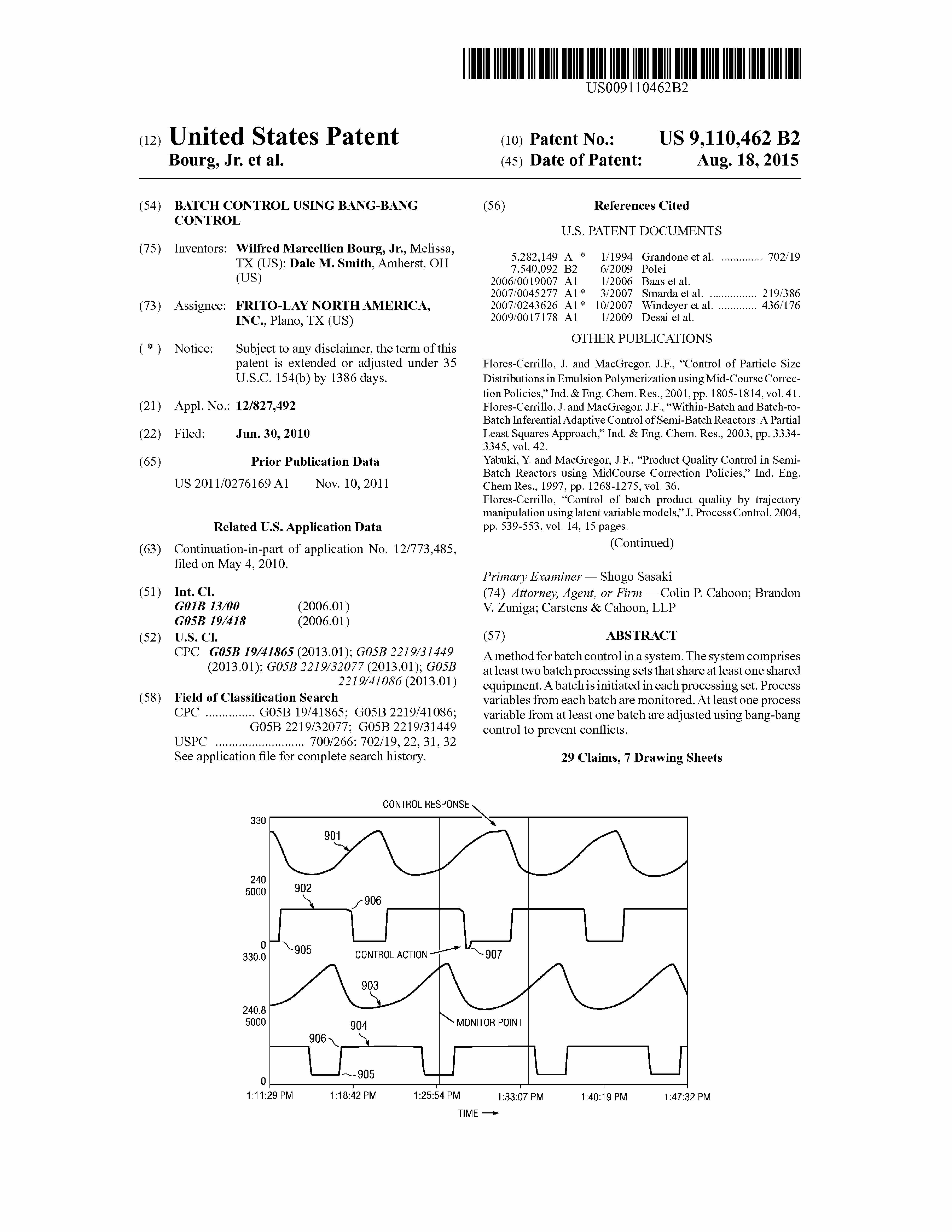
Batch control using Bang-bang control: I have no idea what it is about or what it means, but the bang-bang control sounds uncontrollable, so US 9,110,462 has the best title. 

BANG BANG seems more like what you call a process that is out of control, but what do I know

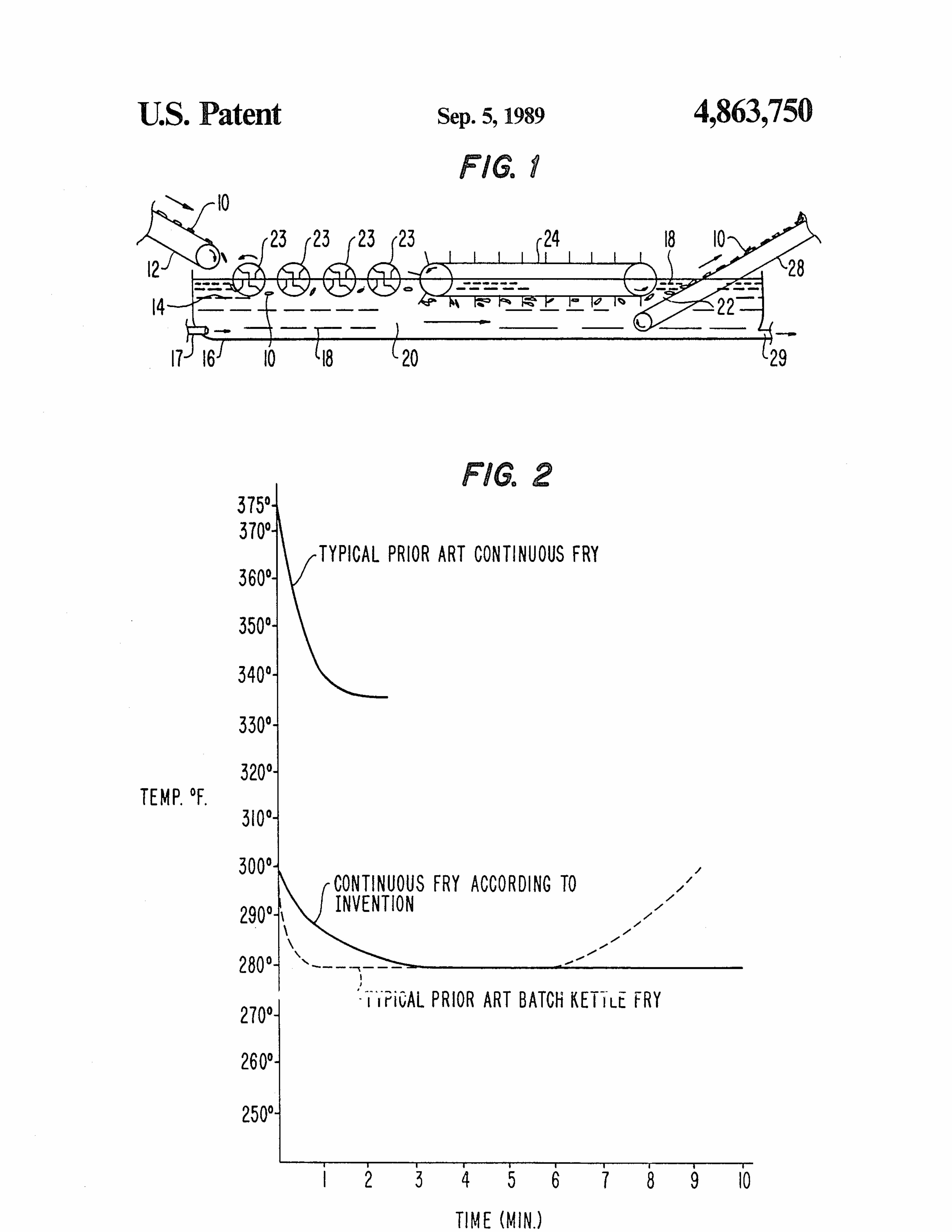
Batched control is apparently related to the thickness and hardness of chips, with batch-frying giving a more kettle cooked texture and the continuous cooking being more like commercial Lay's potato chips. Frito-Lay was working on unlocking the secret to continuously cooking a kettle-style chip; get the deets in US 4,863,750. Did they ever achieve it?

This is some serious potato chip science

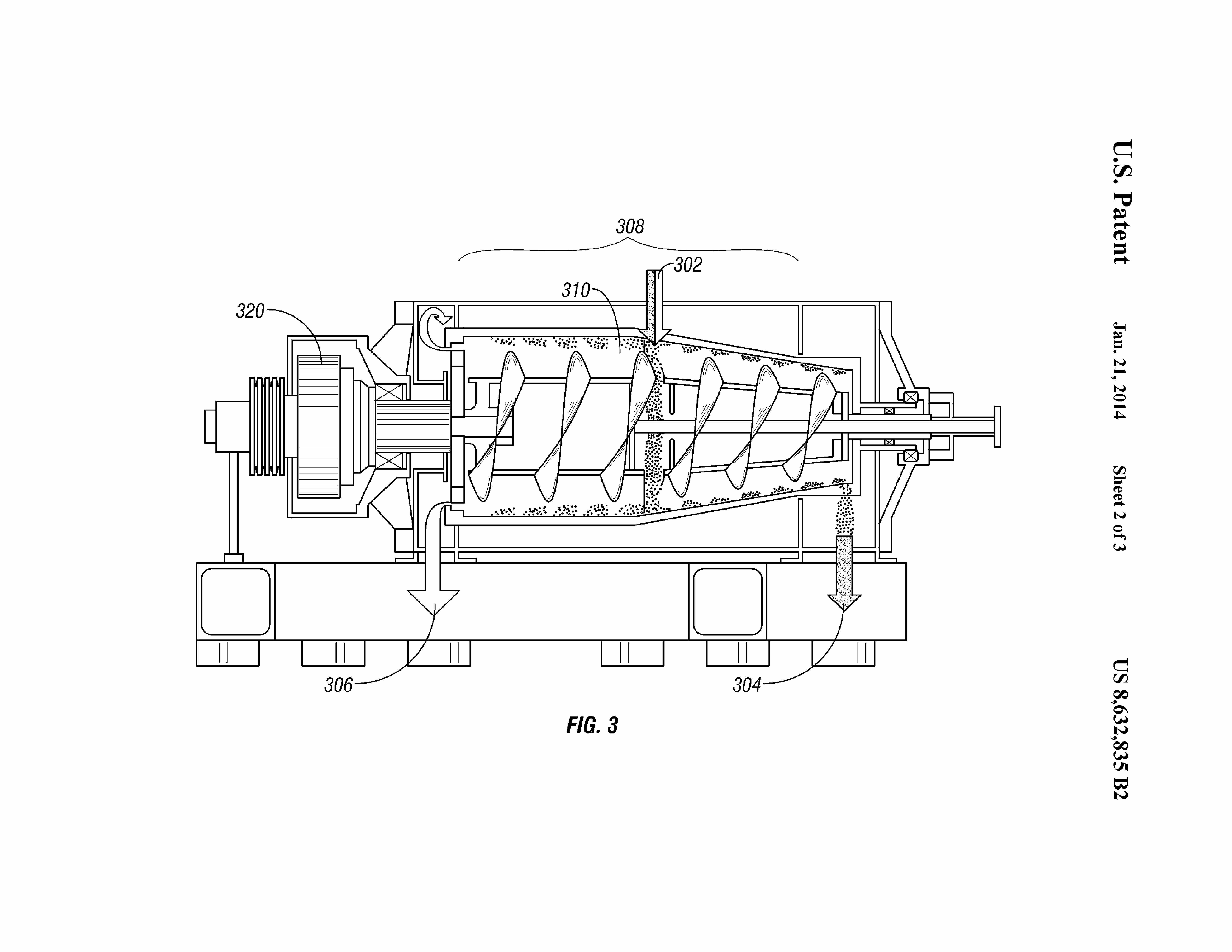
You know chips like Pringles aren't really just sliced potato, right? Patent 8,632,835 proves it:

The tiny granules in the figure make it pretty clear there's no potato slice
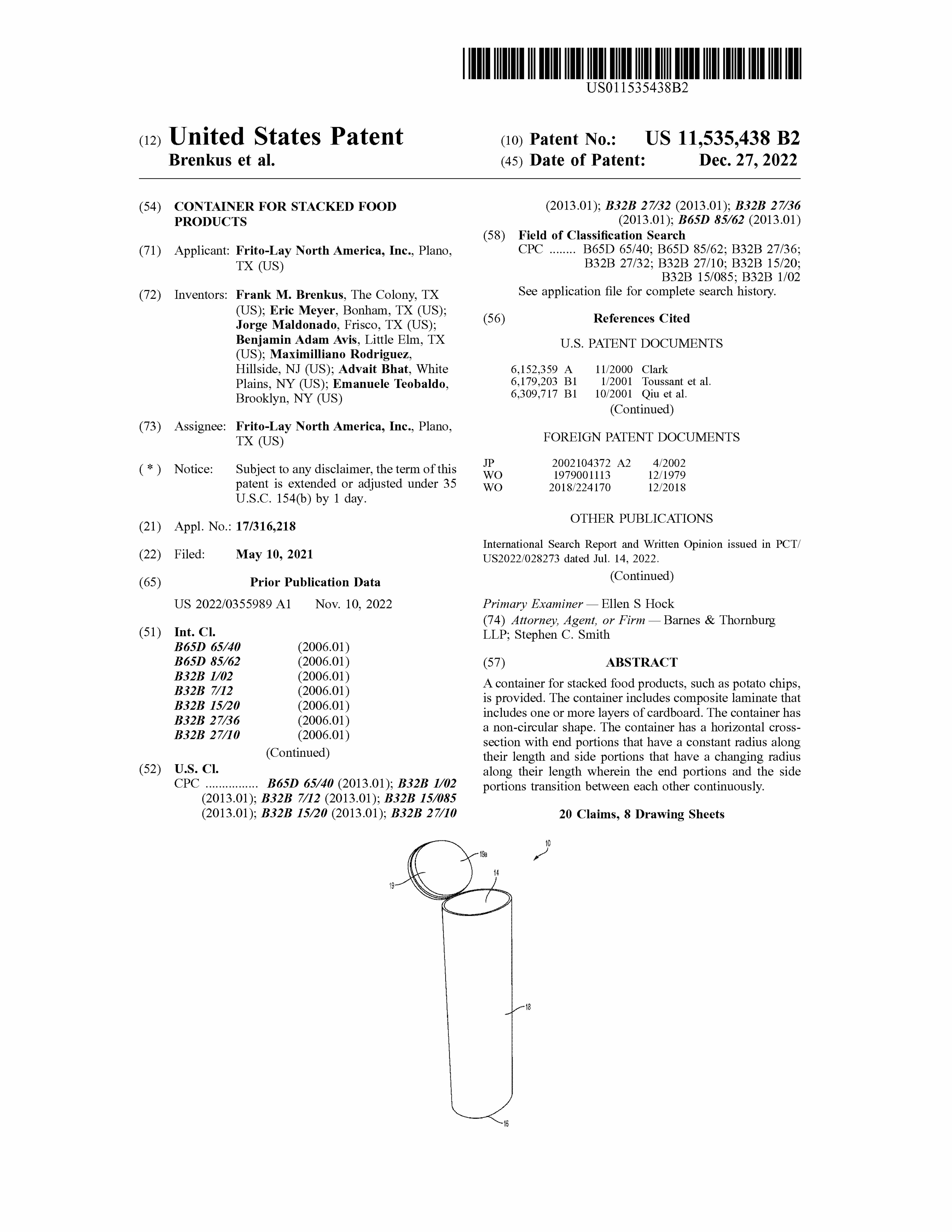
And finally, US 11,535,438, the patent for a specially designed snack container, because we are ever reaching higher in snack containment technology: 
This design certainly wasn't over engineered...

Ugh, thanks to this, I could really go for a chip right now.

Monday, October 30, 2023

Squishy Patents: Of Squishmallows and Squishables

In a previous post about plushes (Squishmallows vs. Squishables), I mentioned a potential future post investigating design patents for different squishes belonging to the parent companies.

It turned out to be a far more difficult task than anticipated. 

In true librarian fashion, I was looking forward to some really complex search queries in Patent Public Search. For example:

((kelly WITH toys).as. OR jazwares.as.) AND plush AND D$.pn.

Unfortunately, that's not how things worked. I was forced to simplify my query multiple times and still had zero results. I resorted to searching "squishable" and "squishmallow". This was in no small part because the parent companies did not have any patents, or, in the case of Jazwares (Squishmallows), useless unrelated properties. [Although one might argue that this patent for a social media system could be related to their Squishmallows marketing.] 

An image taken from Jazwares' patent D634,373 of a toy dog
This dog thing in patent D634,373 from Jazwares terrifies me
Somehow, these results were even more baffling. The only patents that reference Squishables or Squishmallows are owned by other entities. And they don't directly refer to the patented designs by the product names; those appear in the "other publications" section. 

In the case of Squishmallows, when you visit the current version of the website referenced by patent D994,050 or D995,661, the plushes shown are genuine Squishmallows. You can see the tags with the registered Squishmallow brand name.

The Morey Organization, assignee to patents D994,050 and D995,661, created a design based on Squishmallows and then cited that brand's plush (sold by a similar group). These two birds are much more articulated than most Squishmallows--significantly, legs attached to feet, not just pseudopod-like appendages--and have Morey Organization stitching, which makes them patentably unique, perhaps.

An image of the design from Morey Organization's patent D994,050
Bird squish, non-mallow
In the case of Squishables, the patents are similarly for products from non-Squishable entities that cite genuine Squishables (maybe?) in the "other publications". I've mentioned Ontel products before (see the cat inventions post) and I know they aren't associated with the Squishable brand. The critters in patents D855,708 and D857,122 have features not seen in Squishables (the same zipper on the back noticed in the cat post). 
An image of the design from Ontel's patent D855,708
But why does it have a zipper?!
To me, these patents aren't just squishy in terms of the items. They feel intellectually and commercially squishy.

It seems as though Squishables and Squishmallows have neglected to patent any of their designs. Perhaps it is why both lines seem to have several similar plushes, and so many more similar products seem to exist.

However, I think I can tell the difference between the brands; and at the very least I know there are various brands.

Monday, August 28, 2023

Inventions for Cats

You know what we really love in my household? Cats. We are serious cat people. And, it was our great misfortune to lose one of our beloved cats, Miss Mosquito, this past weekend. Though it is painful for me to write about it, I'm having a hard time focusing on other work tasks, so I decided to make a blog post about some patented inventions for cats. So please forgive me if this is a slightly sloppier entry than usual.

I'm not certain what the purpose of this cat plush is--or why it has a zipper on its back--but it's cute and mildly kitty-looking. OnTel Products mostly sells battery-powered devices and stuff you'd find stocked by the check out in a mega store, but they took this cat seriously and own a design patent, no. D857,121.

Image of the plush cat from patent no. D857,121
Having a cat indoors without some kind of designated feline furniture is not recommended. At the very least, have a scratching post. For best results, get a cat tree or tower, like this "Animal House", design patent no. D989,408. Cats love to climb and survey the world from the highest available perch. The built-in hidey-hole is an attractive addition for shy cat family members!
Design patent D989,408 drawing of an elaborate cat tree/tower
Multiple cat household? Recently adopted kitten struggling to adapt? Try plugging in "Pheromone Compositions and Uses Thereof" (US patent no. 11,331,296) from Ceva Sante Animale. If you have cats, you might be more familiar with trademarked name Feliway. It's a product we rely on and keep dispersing almost constantly. These manufactured pheromones have a calming effect on cats, and can help decrease tensions between them (as in our case) or just help some of the more anxious ones. 

Finally, there's a way to avoid one of the most unpleasant chores that accompanies cats: scooping and cleaning the litter box. It's probably not quite as bad as changing and handling a used a child's diaper (I wouldn't know; I have cats, not kids), but no one likes it. With the "Automated Litter Device" (US patent no. 11,523,586) from Automated Pet Care Products, the litter is both scooped and refilled for you. Sensors detect when kitty is present and when kitty has left, and when more litter needs to be increased. Unfortunately, I imagine my cats would not appreciate the litter-eating robot and would refuse to use it, leading to a bigger, more unpleasant kind of chore. 

Figures from patent no. 11,523,586 describing its function

BONUS: This is Mosquito, and her litter mate sister Cricket. 'Squito has the white and black fur and blue eyes.

A photograph of a cat, named Mosquito, with blue eyes and white and black fur
A photograph of a cat, named Crickt, with tortoise shell patterned fur and green eyes.

Tuesday, June 27, 2023

Designing Summer Fun

You know what we don't do a lot of in this blog? Look at design patents. Sure, they've been touched on in one or two previous posts (like Donut Day Innovation) but they've largely been overlooked in favor of plant and utility patents and various marks. In retrospect, no reasons for their exclusion stand out.

How about some summer fun design patents?

The on-site display has featured a water slide (D983,303) and a Birkenstock sandal (D963,303). What else can we find?

There are many design patents for bathing or swimming suits, but only two are featured here. The first, D087,531, was selected because it is among the first design patents that looks modern. The second, D918,531, was chosen because it has interesting innovative drop-down modesty panels, creating a suit and cover-up all-in-one. 

Drawing from patent number D087,376 that shows a one piece swimming suit
1931 Swimming suit, pat. no. D087,376

Drawing from patent number  D918,531 that shows a bathing suit in its cover up modeDrawing from patent number  D918,531 that shows a bathing suit in its bikini mode

Swimsuit and cover-up in one, pat. no. D918,531

Of course, if you're headed to the beach, just a suit isn't enough--you need a beach chair and umbrella. Grab the Combined Portable Beach Chair and Umbrella Therefore, D219,377. It's an excellent product for those who like to eliminate extra burdens and crave visible efficiency. 

Drawing from patent number D219,377 showing a folding beach chair with an attached umbrella
D219,377 includes fun nautical decorations on the seat and umbrella storage pocket

Don't care for the beach? Enjoy some swimming pool designs! Quite a few of these exist, going back decades, but one of the better, in this blogger's opinion, is D870,918. After all, it's made from a shipping container and it has a viewing window. 

Drawing from patent number D870,918 showing an upcycled pool with a viewing window
D870,918: Keep an eye on those swimmers enjoying their upcycled pool!

For either a beach or pool visit, follow Douglas Adams' advice and bring a towel. Even better, get one with pockets. D708,870 can keep belongings tucked away and stored, and is designed to drape over a poolside lounge chair.

Drawing from patent number D708,870 that shows a towel with pockets for storing personal items fitted over a lounge chair
D708,870 features a folded edge to fit on a lounge chair

If you dislike the suit of D918,531, you can still skip an extra garment when you bring along D741,575, Cover Up Towel. Wait, that's just a towel with a cinching edge! Did it really deserve its own patent?

Drawing from patent number D741,575  that shows a towel which converts into a superhero-style cape cover up
D741,575 seems a little obvious
And, last, stay hydrated when frolicking in summertime heat. Always bring water in something stylish like D987,379; Drinkware invented and owned by Houstonians. We truly understand the need for well-designed water bottles right now. 
Drawing from patent number D987,379 that shows the ornamental appearance of drinkware
Invented by Colton Bryan Haas and assigned to Vinglace LLC

Remember your pets and grab Springer Pets' water mug D989,560. (The patent doesn't say it is for pets, but I've assumed it is because the assignee looks like a pet company. Read the whole patent and decide for yourself.)

Drawing from patent number D989,560 showing a water mug body
Water mug body, pat. no. D989,560


Tuesday, November 29, 2022

Finding University Patents, Part II

After the conclusion of the Rice's First Patents Saga, it occurred to me that I may have made a mistake back in May when investigating other universities' patents. During the initial search for Rice's first patents, my search strategy inadvertently excluded anything prior to 1970. Unfortunately, the blog post about 12 other schools' first patents relied on the same strategy--I have potentially wronged these institutions.

Therefore, let's take a second look at when these Rice-caliber schools first earned U.S. patents.

This time around, University of Chicago is the clear leader, assigned its first patent in 1917... if design patents count. US D50337 is for the appearance of a plate (like the kind used for dinner; below). 


Narrowed to utility patents, the first school assigned a patent is Cornell University in 1931, with US 1,810,682 (another dairy-related invention).

In 1933, Dartmouth and Stanford were both assigned their first patents, US 1,908,296 and US 1,933,773, respectively. 

Next up is MIT, who was assigned patent 2,006,558 in 1935. 

University of Chicago makes a reappearance in 1936 with its first utility patent, US 2,032,829.

While Rice Institute was pursuing its first three patents, there was a lull from the remaining seven. Duke University was assigned its first patent, US 2,446,091, in the same year as Rice--1948.

Almost 20 years later in 1965, Georgetown was assigned US 3,223,083. This patent is for a "Method for adhesively securing together skin and other soft tissue and bone", somewhat similar in goal to patents recently issued to Rice (US 11,447,744/11,371,014, "Hypothermic 3D bioprinting of living tissues supported by perfusable vasculature" and US 11,246,962, "Neuronal scaffold-water soluble graphene for treatment of severed spinal cords and neuronal repair").

Image from US 3,223,083: Method for adhesively securing together skin and other soft tissue and bone
US 3,223,083: Method for adhesively securing together skin and other soft tissue and bone

Rather shockingly, the last five include those most highly regarded US colleges and universities, four founded before America was an independent country. The previously listed dates for Vanderbilt (1975), Princeton (1976), Harvard (1977), Yale (1977), and Brown (1984) were correct. Given the corrected information on when other institutes were pursuing patent ownership, it is even more shocking that Harvard, Yale, Princeton, and Brown didn't pursue IP ownership till the 70s and 80s, centuries after they were founded.

That is not to say American universities and colleges weren't supporting researchers, and thus employees weren't inventing. For example, Stanford appears to have hosted a large number of patentees throughout the late 1800s and early 1900s, before 1933. 

It is possible that earlier patents were missed again, or these inventions were assigned to a college or university but were not researched at and/or supported by them; the actual patents do not provide that information.